HUMAN BEINGS

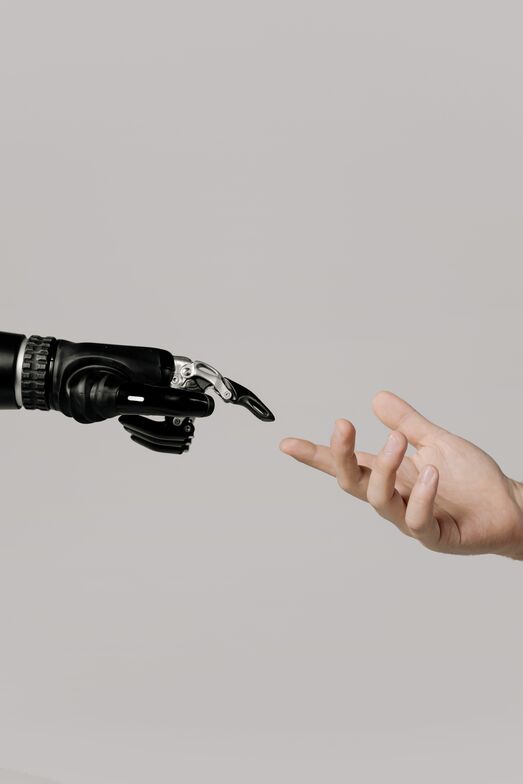
“Man is the only creature who refuses to be what he is.” ― Albert Camus
What is human nature?
Literature suggests that human nature is a set of certain fundamental qualities or characteristics that humans are said to possess naturally.
But this seems impossible, right? Or is it…? Are there certain aspects of our existence that are shared by every human being? Sure, there are similarities, but so much can vary across circumstance and experience… no?
Consider the juxtaposition of “nature” and “nurture.” This distinction often arises around bad behavior, when people are seeking answers for why someone would do something hurtful. Was it nature? Were they just bad from the start? A bad apple? Or were they made bad over time because of experience, or how they were treated?
Various accounts of Charles Manson have dealt with this question. The approach of law enforcement at the time, as well as the general public, was to ask: how could a person have done these terrible things? Behaviorists — developing an approach now called ‘forensic psychology’ — began asking the question almost in reverse. They learned about Manson’s life, about how much trauma he had endured over his lifetime, and they then asked: knowing what we know now, how could a person not have done these things?
This is not to suggest that trauma necessarily creates bad behavior. Far from it. We are all responsible for our own actions, and everyone has a choice. In fact, much of the world’s great art is rooted in heartache. The blues is an entire genre of musical reckoning with heartache and trauma… a genre that, in turn, has influenced countless others: rock, jazz, R&B, hip-hop, gospel, and more. And some of the most effective social reformers seem to have been able to marshal their experiences of trauma into a more compassionate vision for humanity. Martin Luther King, Jr. — and any Civil Rights organizer who experienced the mean end of a firehose or a Southern jail cell — comes immediately to mind. Nelson Mandela, too.
Quaker author and teacher Parker Palmer suggests that the heart can break in at least two different ways. A brittle heart can shatter into dangerous shards that we are forever trying to put back together the way it was. A supple heart, however, will break open… creating even greater capacity for love, for grace, for mutual understanding. Palmer’s teaching is informed by a Hasidic tale, whereby a pupil asks a rabbi why the Torah commands people to place the holy words upon our hearts (rather than in them). The rabbi responds: because our hearts are initially closed, the words rest upon our hearts until the heart breaks open from life’s trials and the words fall in.
Can we say then that part of human nature is suffering? The Buddhists certainly think so! The first of the Four Noble Truths, cornerstones of Buddhist practice, is dukkha. Loosely translated as suffering, it is the underlying sense of stress or anxiety that impacts much of our daily living. The origin of suffering, says the teaching, is our continued craving and grasping, rooted in our ignorance about the nature of things (and oneself). We attach permanence to our ideas about a life (and a self) that are constantly in flux. It is as though we’ve taken a picture of a moving river and then fallen in love with the river in the picture… so much so that we experience distress when we look again upon the actual river and find that it is not the same one captured in our picture.
Paraphrasing Camus in this regard: we refuse to be what we are and instead inhabit a snapshot of who we believe we are, or are supposed to be. Human nature in this understanding is a kind of universal temptation toward ignorance. We opt — consciously and subconsciously — for easy fiction instead of dealing with complicated reality.
Where does all of this leave us with our understanding human nature? Is human nature fixed, or is it ever changing? Are people essentially good, sometimes learning bad behavior through neglect or trauma… or are humans essentially bad (as some other religions suggest quite clearly), requiring correction and coercion (often from a paternalistic deity)? And what of bad behavior? Is it the result of nature or nurture? And good behavior…?
It is past time in this short piece to tell you that there will be no definitive answer given here. (Sorry!) Only encouragement for the journey.
What seems clear is that we humans long both for a sense of individuality and also for a sense of ourselves as one of many, as connected deeply to others and to the world we share. These dual longings are forever in tension… a tension that can be creative and connective, but one that can also become destructive when our balance is off or when our heart becomes brittle.
If we cannot agree on answers then, perhaps we can at least find commonality in the questions, and in questioning. Perhaps it is the true nature of humanity to question, to wonder, to learn. As we sing…
We seek elusive answers to the questions of this life.
We seek to put an end to all the waste of human strife.
We search for truth, equality, and blessed peace of mind.
And then, we come together here, to make sense of what we find.
And we believe in life, and in the strength of love,
and we have found a joy being together.
And in our search for peace, maybe we’ll finally see:
even to question, truly is an answer.
Indeed.

About
-
UUSGS Meetinghouse